



Walk onto any storm-damaged property or stalled construction site, and the tension is immediately palpable. For insurers, TPAs, and dispute resolution teams, construction dispute resolution in Australia rarely starts in a courtroom.
It begins in the living rooms of frustrated homeowners and on the muddy boots of site managers. Bridging the gap between the physical reality of a building site and the precise legal wording of an insurance policy is a tough but critical job.
Today, the stakes are higher than ever. Supply chain issues, high interest rates, and builder insolvencies have turned minor disagreements into major financial liabilities. When a claim derails, the consequences ripple outward. This guide outlines the common triggers for conflict and delivers five field-tested strategies for settling claims smoothly.
Common Triggers for Disputes in Insurance Repair Work
Disputes rarely materialise out of thin air. They stem from breakdowns in communication or technical assessment. When dealing with construction dispute resolution in property building claims, the stakes can be incredibly high. Here are the most frequent triggers:
The Battle of Causation vs. Maintenance:
Following a severe weather event, a homeowner claims a leaking roof is storm damage. The assessor determines it is actually caused by years of leaf build-up and rusted flashings. Standard policies cover sudden, unforeseen damage, not a lack of maintenance, immediately creating a dispute.
Defect vs. Consequential Damage:
Insurance policies are not workmanship guarantees. Under standard Contract Works policies, the defect itself (like a badly waterproofed balcony) is typically not insured, but the resultant damage to the flooded carpets below often is. Disputes constantly flare up over this boundary line.
Scope Creep and Code Upgrades:
When repair work begins, homeowners may request upgrades. Furthermore, repairs might require upgrading to meet the current National Construction Code. Disputes arise over who pays for this improvement versus returning the property to its pre-loss condition.
Builder Insolvency:
With more than 2,800 insolvencies recorded recently across the sector, builders going into administration halfway through an insurance repair leave sites exposed and homeowners in limbo. Transitioning the site to a new builder at current market rates is a contractual nightmare.
5 Strategies for Settling Claims Smoothly
Navigating these triggers requires a systematic, evidence-based approach. The most successful construction dispute resolution teams rely on these five core strategies.
1. Early Engagement of an Independent Building Consultant
The moment a claim exhibits signs of technical complexity, deploy objective expertise. Construction dispute resolution using independent experts provides an immediate, impartial baseline of facts.
A quoting builder has a commercial interest in securing the repair contract, whereas an independent building consultant simply observes and reports the facts. Engaging them early de-escalates tension and aligns with the Australian Financial Complaints Authority (AFCA) guidelines for fair, transparent, and timely claims handling.
2. Clear Scopes and Comprehensive Costings
Ambiguity is the breeding ground for construction disputes. A robust builders report for insurance claim resolution must break down the repair into precise, quantifiable metrics rather than vague descriptions. Instead of stating “replace damaged plasterboard,” the scope must detail the exact square meterage and methodology required. By eliminating guesswork, insurers can confidently compare builder quotes during the tender process.
3. Anchoring Rectifications to Codes and Standards
You cannot settle a dispute based on a subjective feeling about workmanship. To settle a claim, all defect identifications and proposed repair methodologies must be explicitly anchored to recognised codes and standards. State-based tools like the QBCC Standards and Tolerances Guide provide exact parameters for what constitutes a defect.
| Damage Category | Description of Typical Damage | Approx. Crack Width Limit |
| 0 – Negligible | Hairline cracks. | < 0.1mm |
| 1 – Very Slight | Fine cracks that do not need repair. | < 1mm |
| 2 – Slight | Cracks noticeable but easily filled. Doors and windows stick slightly. | < 5mm |
| 3 – Moderate | Cracks can be repaired and possibly a small amount of wall will need to be replaced. | 5mm to 15mm |
Extract from AS 2870 – Residential Slabs and Footings
4. Mastering Policy Wordings and DE Clauses
Construction dispute resolution for insurance repair work operates at the intersection of physical damage and legal wording. How a policy is constructed dictates the entire recovery strategy. For Contract Works policies, the scope of the defects exclusion is determined by which specific was negotiated at placement.
Misapplying a strict DE3 exclusion when the policy contains a broader DE4 clause is a rapid way to end up in a costly legal battle.
5. The Power of the Scott Schedule
When a building claim involves dozens of individual defects, conflicting expert opinions, and vastly different cost estimates, a Scott Schedule brings order to the chaos. Originating in common law courts and mandatory in many state tribunals, this tabular document forces both sides to present their arguments item by item, side by side.
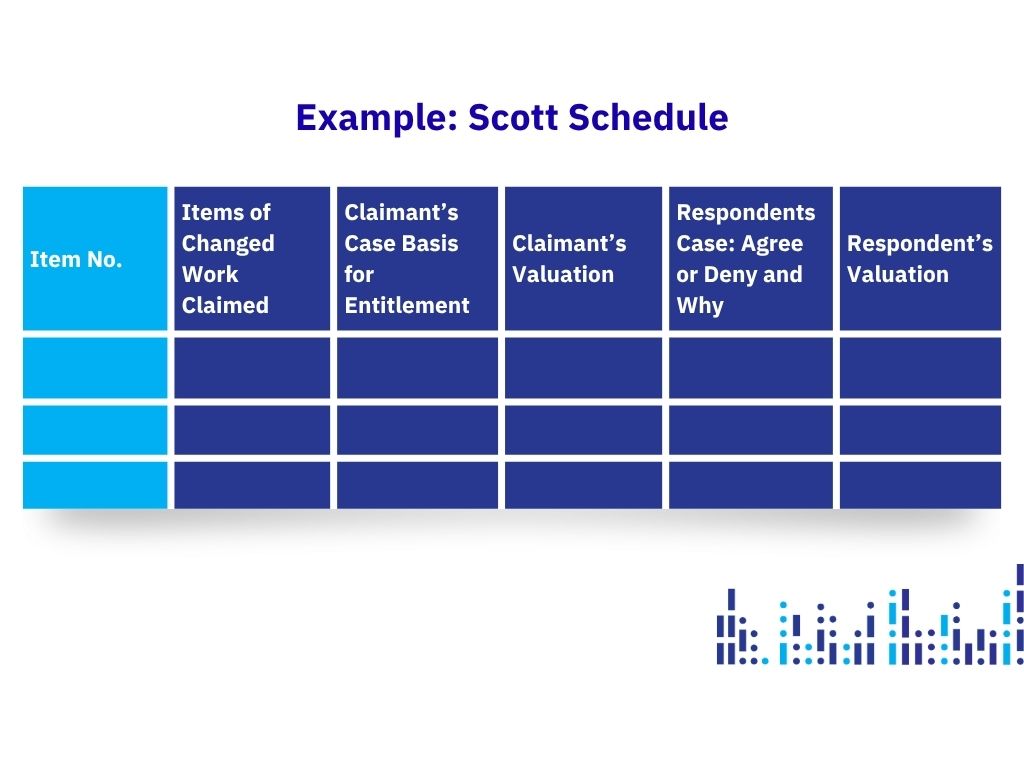
It highlights exactly where parties agree and isolates the specific points of technical divergence, making settlement negotiations far more productive.
The Escalation Pathway: When to Call a Construction Expert Witness
Despite using early experts and clear scopes, some disputes inevitably reach a stalemate. At this moment, a routine building inspection is no longer enough. You must escalate to a formal construction expert witness.
An expert witness is legally bound to assist the court impartially, their paramount duty is to the tribunal, not to the insurer paying their fee. Construction dispute resolution teams should escalate to an expert witness when the cause of damage is intractably unclear, high-value apportionment is required, or tribunal proceedings are imminent.
A compliant report from an independent expert witness is foundational evidence, drastically outperforming a conflicted report from a quoting builder.
For more information and support regarding dispute resolution contact the Morse Building Consultancy team.