Andrew Morse
Founder, Managing Director & Principal Building Consultant


Founder, Managing Director & Principal Building Consultant
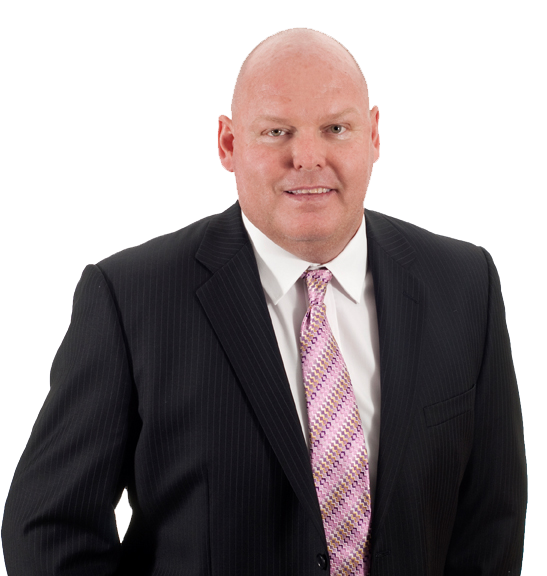
Andrew Morse has spent more than 38 years working in building and construction, with extensive experience in insurance-related building matters.
He founded Morse Building Consultancy in 2012 and today leads the business as Managing Director and Principal Building Consultant. Andrew has personally investigated and reported on more than 2,400 matters involving insurance claims, building damage, defects, non-compliance and structural issues.
His experience covers storm and cyclone damage, flooding, water ingress, fire, vehicle impact, deterioration, defective workmanship and complex causation matters.
Andrew brings something fairly practical to that work. He understands how buildings are actually put together, how materials behave over time and how apparently simple damage can become much more complicated once you start looking at what was already there, what changed and why.
Years in building and construction
Matters personally investigated and reported on
Morse Building Consultancy established
Andrew started his career in the building industry as a carpenter before moving into broader construction and building work.
That practical background still shapes the way he approaches an investigation today. He looks at more than the visible damage. He considers how the building was constructed, how different elements are meant to perform, what has changed and whether the physical evidence fits with the history of the property and the event being investigated.
Morse Building Consultancy was established as a specialist consultancy business in 2012, building on Andrew’s construction experience and his increasing involvement in insurance-related building investigations.
Andrew’s experience includes:
These matters are rarely as simple as identifying a damaged component and deciding it needs to be repaired.
A roof can have recent storm damage alongside years of corrosion. Water ingress can follow a major weather event but expose an existing waterproofing problem. Cracking can be recent, historic or influenced by several different conditions.
The real work is separating those issues and understanding what the available evidence can actually support. Andrew has spent much of his career doing exactly that.
“We follow the evidence, not the desired outcome.”
Andrew Morse
Andrew has a straightforward view of what independence should mean in a building investigation.
A consultant should not arrive on site looking for evidence to support a preferred outcome. The inspection comes first. The conclusion comes afterwards.
If the evidence supports damage caused by the event being investigated, the report should say so. If it points instead to deterioration, maintenance, previous damage, poor workmanship or another cause, that should be reported just as clearly.
For Andrew, independence is not simply a word used to describe the business. It is about being prepared to report what the evidence shows, even when the finding is not necessarily what one of the parties expected to hear.
That approach also means being clear about the limits of the consultant’s role. MBC provides technical evidence around matters such as damage, causation, compliance and rectification. It does not determine whether an insurance policy responds to a claim. That decision remains with the insurer or relevant decision-maker.
Andrew has worked extensively on building matters arising from insurance claims and major weather events, along with individual complex and disputed losses.
Those assignments can involve very different buildings, circumstances and levels of damage, but the basic question is often the same: what actually happened here?
That can require Andrew to consider physical damage, construction methods, maintenance history, previous repairs, weather information, photographs, documents and the condition of surrounding building elements before forming an opinion.

Over his career, Andrew has been involved in building investigations following some of Australia’s most significant natural disasters, including major cyclones, floods, storms, hail events and bushfires.
These events have taken him across Queensland, New South Wales and other affected regions, assessing damage to a wide range of properties and identifying the often complex factors contributing to building damage.
The following is a selection of major catastrophe and severe weather events Andrew has been involved in since 2006.
| Date | Event | Event type | Region |
|---|---|---|---|
| March 2006 | TC Larry | Tropical Cyclone | Far North QLD |
| October 2007 | Hail Storm Lismore | Severe Thunderstorm | Northern Rivers, NSW |
| November 2008 | The Gap Tornado | Tornado / Microburst | Brisbane, QLD |
| December 2010 – January 2011 | SE QLD / Western QLD Floods | Inland & Riverine Flooding | Lockyer Valley, Brisbane, Ipswich, Outback QLD |
| February 2011 | TC Yasi | Severe Category 5 Cyclone | Mission Beach & North QLD |
| January 2013 | TC Oswald | Ex-Cyclone & Flooding | Bundaberg, Coastal QLD to Northern NSW |
| November 2014 | Hail Storm Brisbane | Severe Supercell | Brisbane CBD & Suburbs, QLD |
| March 2017 | TC Debbie | Cyclone & Downstream Flood | Whitsundays (QLD) & Lismore (NSW) |
| 2019 – 2020 | Black Summer Fires | Catastrophic Bushfires | Widespread NSW Coast/Ranges & SE QLD |
| February – March 2022 | Lismore / NSW & QLD Floods | Extreme Catchment Flooding | Northern Rivers (Lismore, NSW) & SE QLD |
| Late 2023 | Fires QLD / NSW | Early-Season Bushfires | Darling Downs (QLD) & Northern NSW |
| December 2023 | TC Jasper | Cyclone & Record Rainfall | Cairns & Daintree (Far North QLD) |
| December 2023 – January 2024 | SE QLD Storms | Successive Supercells | Gold Coast, Scenic Rim & Brisbane, QLD |
| January 2024 | TC Kirrily | Tropical Cyclone | Townsville & Inland Outback QLD |
| December 2024 | Tornado Event Christmas | Severe Supercell / Tornadoes | Gold Coast & Scenic Rim, QLD |
| Summer 2024 – 2025 | Hail Storm South East QLD | Severe Storm Season | Brisbane & Southeast QLD |
| March 2025 | TC Alfred | Severe Cyclone & Metro Flood | Brisbane, Sunshine Coast & Gold Coast, SEQ |
| March – May 2025 | Western QLD Floods | Prolonged Surface Trough | Central & Western QLD Catchments |
| May 2025 | Floods Mid North Coast NSW | 1-in-500-Year Flash Flood | Taree, Kempsey & Mid North Coast, NSW |
| Late 2025 – Early 2026 | Fires QLD / NSW | Large-Scale Fire Complexes | Darling Downs (QLD), Mid-Coast & Tenterfield (NSW) |

Andrew is particularly focused on the level of detail required in complex building investigations and the reports that follow.
“The devil is in the detail. You can’t properly assess a building or prepare an accurate scope of work without understanding exactly what’s happened, what’s caused the damage and what needs to be done.”
That attention to detail is reflected in the reports Andrew prepares. Some complex matters have required reports running to hundreds of pages, documenting the evidence, findings and proposed scope of works. For Andrew, a thorough, well-supported report is essential to helping insurers and other parties make informed decisions and reducing the potential for disputes.
Andrew is also involved in the broader insurance building and engineering consultancy profession.
Morse Building Consultancy is a Corporate Founding Member of the Association of Insurance Building and Engineering Consultants, AiBEC. Andrew has been involved in AiBEC initiatives focused on the quality of expert reporting, including the Expert Reports Best Practice Technical Committee.
That involvement reflects an area Andrew has become increasingly interested in: the quality of the evidence and reasoning that sits behind a technical report.
A useful report should give the reader enough information to understand what was found, how the evidence was interpreted and why the consultant reached the conclusion they did.
Andrew is a trade-qualified carpenter and licensed builder. His qualifications and professional training include:
Andrew holds building licences and registrations across Australia, including:
His professional affiliations include the Housing Industry Association, Queensland Master Builders Association and Australian Tile Council. Morse Building Consultancy is also a Corporate Founding Member of AiBEC.
Andrew continues to undertake further professional and academic development alongside his work at MBC. Andrew is currently studying an Honours Degree in Construction Management part-time.
Contact Morse Building Consultancy to discuss a building investigation, technical report or scope of works.